Fewer girls than boys have an autism diagnosis. This disparity could stem in part from biological differences that shield girls from the condition, a theory called the female protective effect. Those sex-specific factors have long been a mystery, but a new study provides a potential candidate: An X chromosome gene, ZFX, that regulates many autism-linked genes.
“This research gives us one of the first direct links between sex differential biology and regulation of known autism risk genes,” says Donna Werling, assistant professor of genetics at the University of Wisconsin-Madison, who was not involved in the study. “The field has been searching for this for a while.”
For decades, autism was seen as a predominantly male condition, with early estimates putting the ratio of autistic boys to girls at around 4-to-1. Over the years, as studies revealed that this was partly due to diagnostic biases and differences in behaviors such as masking, that ratio dropped. Even after attempts to reduce these biases, however, the ratio of autistic boys to girls appears to linger somewhere between 2-to-1 and 3-to-1, suggesting that there is a biological contribution to this difference.
Autistic girls are more likely to carry autism-linked gene variants than boys are, several studies show. This difference holds true even when people are matched on traits such as severity, suggesting it can’t be fully explained by assuming only more profoundly affected girls get diagnosed, Werling says. “There may be something about females’ biology that reduces the impact of autism risk factors.”
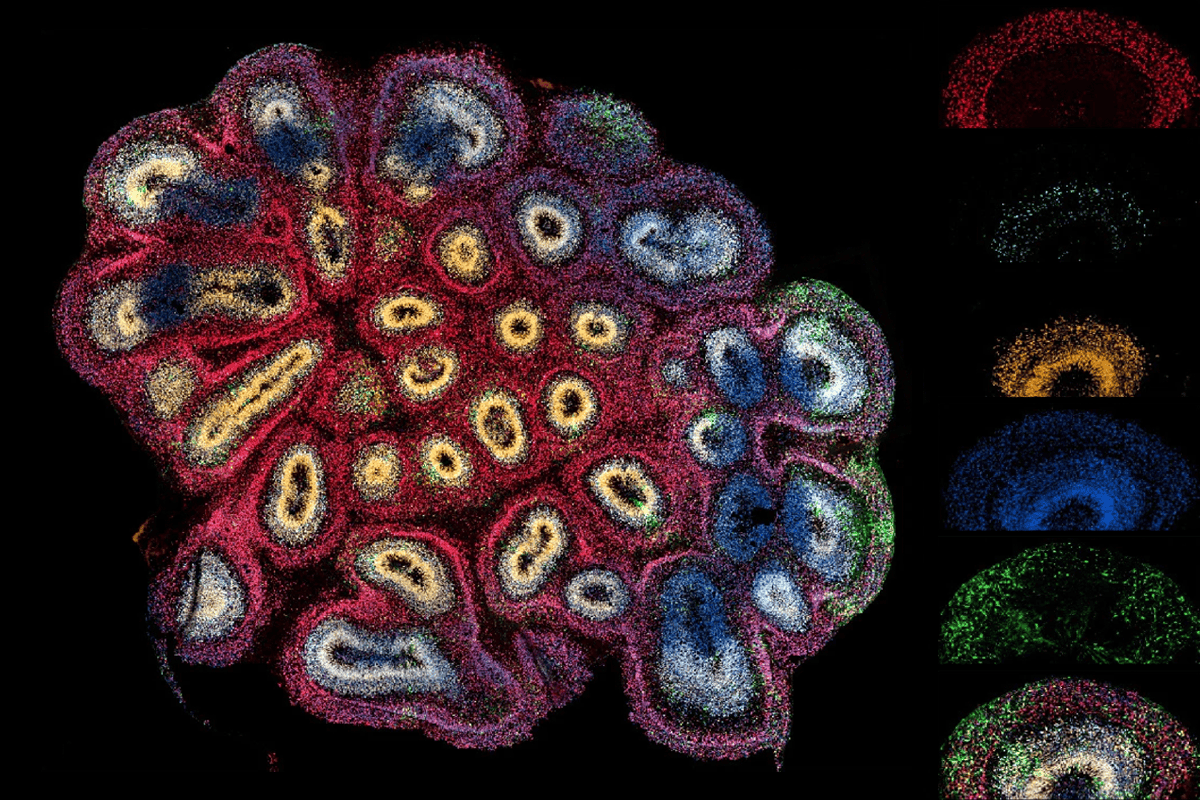
The new study, published earlier this month in Nature, investigated the transcriptomic convergence of 20 autism-linked genes by knocking down each one, one at a time, and quantifying changes in the expression of other genes. Because variability among donors makes it tricky to study this in brain tissue, the researchers started with genetically identical neural progenitor cells derived from a male stem cell line, says study investigator Maya Talukdar, a graduate student in Christopher Walsh’s lab at Harvard Medical School. Overall, the knockdowns affected a median of 920 genes, and 18 of those changed the expression of at least 287 genes.
The affected genes showed large overlaps. “The degree to which we found very similar effects on downstream gene expression was striking,” says study investigator Rebecca Andersen, a postdoctoral researcher in Walsh’s lab. “In particular, many of the shared differentially expressed genes were themselves autism-associated genes.” The team repeated these experiments in brain organoids, where the same transcriptomic convergence appeared in both progenitor cells and excitatory neurons.
Many of the downstream genes have regulatory functions, and 70 of them may drive convergence, the team found by using an algorithm that infers relationships between genes from expression changes to generate a gene regulatory network (GRN). These genes were highly interconnected, and nearly half have been linked to autism, including CHD8. REST, a convergent gene that has not previously been linked to autism, contributes to brain development.
“When we disrupt autism-associated genes, they converge initially on this central hub of regulators,” Andersen says. “Which then have widespread effects on gene expression broadly, that ultimately lead to effects in neural development.”
One gene in particular—ZFX, a transcription factor expressed on both X chromosomes—stood out in the network because it met three criteria: It is female biased, frequently suppressed by knockdowns and positioned such that it could regulate multiple autism-linked genes, Andersen says.
High-impact autism variants usually cause a loss of function for the encoded protein. “A mutation in a different autism-associated gene could ultimately lead to decreased expression of ZFX and many other autism-associated genes,” Andersen says. “In females, higher expression of ZFX could put the brakes on that.”
T
ranscriptomic convergence in genes linked to autism and other neurodevelopmental conditions has been seen in other recent studies, including one led by Kristen Brennand, professor of psychiatry at Yale School of Medicine. “Although there might be hundreds of different genetic ways to have autism, they’re all hitting these shared downstream networks,” Brennand says.The latest findings, which strongly implicate ZFX in autism’s sex bias, “are highly novel and unexpected,” Brennand says. “I’d go as far as saying potentially transformative, albeit preliminary.” They need to be validated experimentally to demonstrate causality, she adds.
ZFX does not fully explain the female protective effect, Talukdar says. The knockdowns changed the expression of other female-biased autism genes, including several X chromosome genes, that could play similar roles. “This is a model I hope will continue to shed light on autism,” Talukdar says.
Dosage-sensitive X chromosome genes may explain male bias in 17 other conditions, including congenital heart disease and clubfoot, according to an article Talukdar and a colleague published in March. “It gives us a paradigm for thinking about other male-biased childhood conditions,” Talukdar says. Understanding the phenomenon more broadly could help in these other conditions, she adds.
Although these findings need to be replicated in genetically female cells as well as other cell types and in-vivo models, the study opens new avenues to pursue, according to Werling. “Some of the most interesting next questions are: What other genes are involved, and how does this ZFX-driven regulatory mechanism interact with sex hormone biology?” Werling says. “Putting that all together should give us a more complete picture of how much of the female protective effect this ZFX component makes up.”