Interneurons sculpt circuits across the brain, adjusting their synapses, excitability and output in response to learning and social experiences. Glitches in this delicate fine tuning, called experience-dependent interneuron plasticity, can lead to hyperexcitability, seizures and cognitive impairments—all common traits in a variety of neurodevelopmental conditions.
This overlap may be rooted in genetics, according to a new study published today in Nature. Many of the genes turned on in interneurons in a hippocampal circuit during experience-dependent plasticity also appear on lists of genes strongly linked to autism, bipolar disorder, schizophrenia and epilepsy.
“People have talked about a shared genetic architecture [between neurodevelopmental disorders], but what does it look like at a circuit level of cognition?” says study investigator Amar Sahay, professor of psychiatry at Harvard University. “These observations really beg the question: Do they converge on any biological mechanism of cognitive impairment?”
Experience-dependent interneuron plasticity is one answer to that question, the study shows: In a genetic mouse model of neurodevelopmental impairment, the animals fail to upregulate a key plasticity gene and retune their interneurons in response to social experience. Restoring the expression of that gene in parvalbumin (PV) interneurons in a hippocampal circuit eased the animals’ seizures and improved their memory.
“We found a convergent circuit mechanism for these neurodevelopmental risk genes that reflects a shared genetic architecture,” Sahay says.
PV interneuron hypofunction has long been recognized as a feature of neurodevelopmental conditions, including autism, schizophrenia and bipolar disorder, but “this study suggests that it may not be purely the hypofunction that’s the problem,” says Dan Feldman, professor of neuroscience at the University of California, Berkeley, who was not involved in the work. “It may be a loss of the adaptive plasticity of PV cells that contributes to the problem.”
E
xperience-dependent interneuron plasticity occurs all over the brain, including in the somatosensory cortex and the hippocampus. In one such circuit of feedforward inhibition, during learning or social experiences, mossy fibers from the dentate gyrus activate and turn on PV inhibitory interneurons that, in turn, dampen and regulate the activity of neurons in the CA3 and CA2 regions of the hippocampus. This process influences encoding, storage and memory retrieval.Mimicking PV interneuron plasticity by removing the molecular brake on those mossy fibers in mice upregulated a set of 1,530 genes, which the researchers termed experience-dependent genes. Of those, 82 are linked to autism with high confidence, 4 are implicated in schizophrenia and 12 are tied to bipolar disorder, the researchers found. Half of the upregulated autism-linked genes are also implicated in epilepsy.
The team focused on one of those genes, called MEIS2, in CNTNAP2 knockout mice, which are known to have a variety of developmental phenotypes, including aberrant lamination in the cortex, loss of PV cells in the hippocampus, and impaired spatial and social cognition, Sahay says.
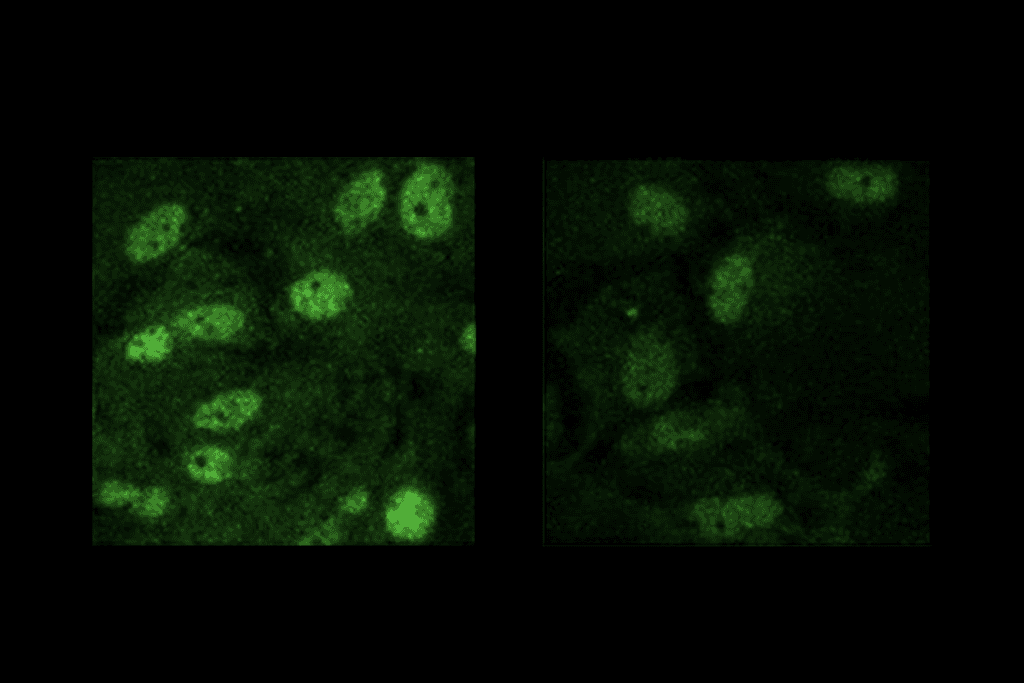
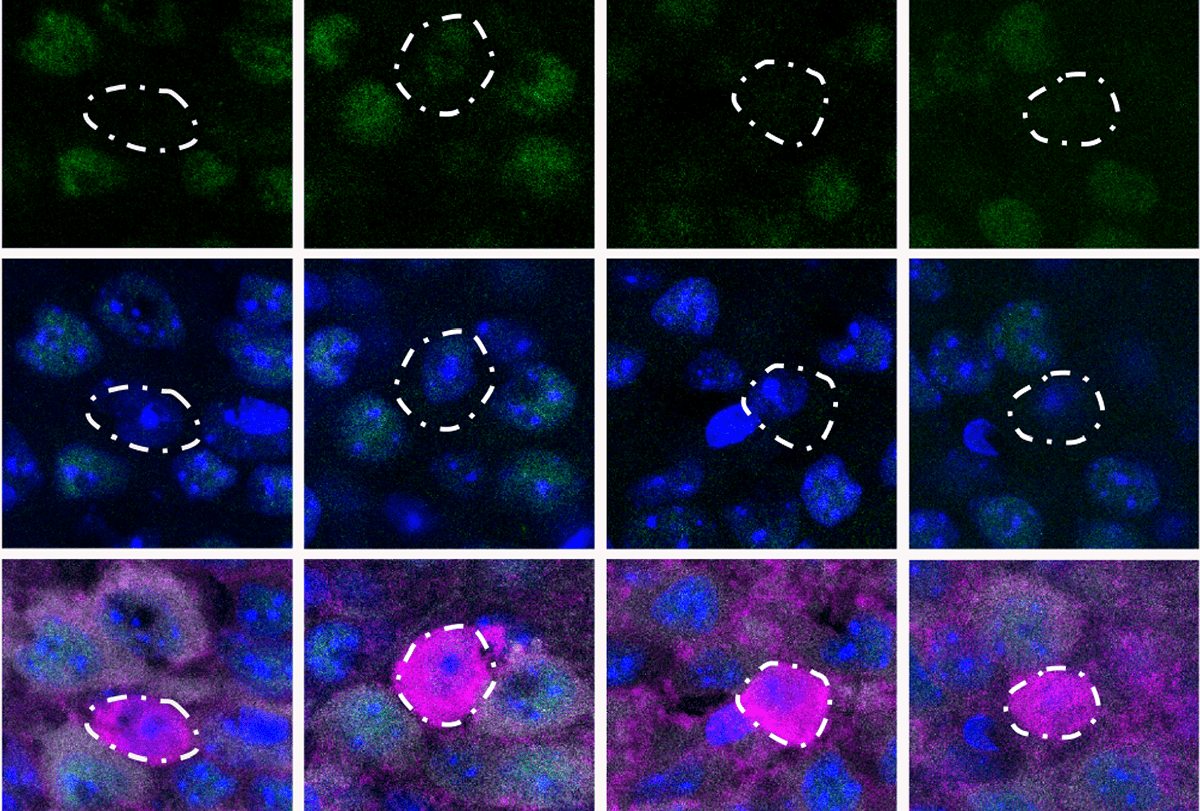
The mice also have a loss of PV interneuron plasticity, Sahay’s team found. Exposure to a novel mouse increased the points of contact between PV interneurons and neurons in the CA3 and CA2 areas, as well as MEIS2 expression levels, in wildtype mice but not in the knockout mice.
“It allowed us, within one model, to look at all of these different [features]: look at whether restoring PV experience-dependent plasticity can rescue cognition, spatial and social, and suppress seizures,” Sahay says.
Restoring expression of MEIS2 in the knockout animals’ PV interneurons reversed the increased excitability and reduced inhibition onto CA2 neurons, as well as synaptic transmission and inhibitory long-term depression. The manipulation also reduced seizures and reversed impairments in social recognition and discrimination by enhancing the ensemble of neurons.
“It’s really very impressive that they were able to develop a manipulation to restore plasticity to PV cells by increasing MEIS2 levels, and to show that that can powerfully rescue many features of circuit function in these animals,” Feldman says.
The power of the study also lies in the “very sophisticated compilation of techniques,” including the fact that they targeted the specific inputs from the PV cells onto the CA3/CA2 region, says Wen-Jun Gao, professor of neurobiology and neuroanatomy at Drexel University, who was not involved in the study.
This study looked at just one experience-dependent gene, but in the future, Sahay wants to look at the entire array of regulators, he says. “We think that these [genes] are acting differently from each other, though. In a PV cell in vivo, all of these genes go up and down in very, very small amounts. So it’s almost as if there’s an [experience-dependent plasticity gene] code.”
Moving forward, he adds, the plan is to work on deciphering that code and how it influences PV cells to sculpt inhibition of different cell populations, and also seeing if the findings generalize to other models of neurodevelopmental disorders.