SFN 2016
Recent articles
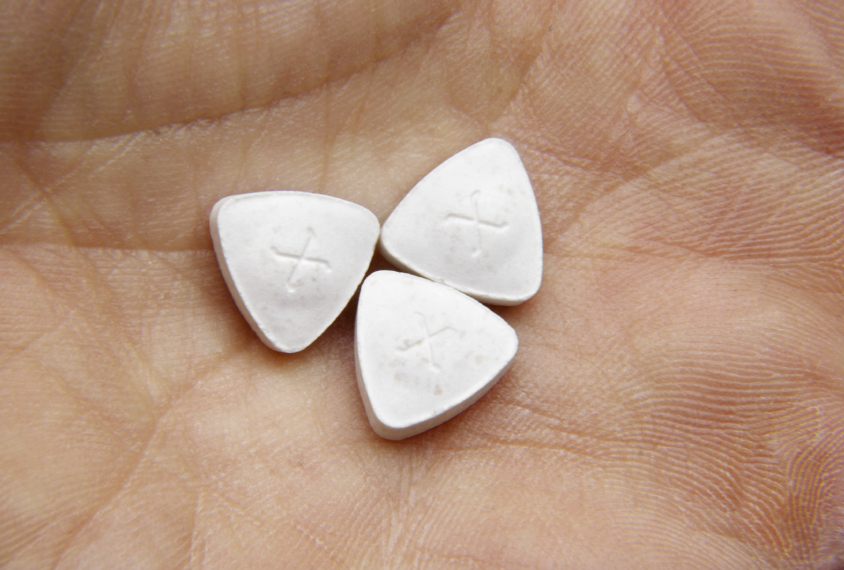
Ecstasy ingredient touted as treatment for anxiety in autism
The active ingredient in the drug popularly known as ecstasy eases social anxiety in people with autism.
Ecstasy ingredient touted as treatment for anxiety in autism
The active ingredient in the drug popularly known as ecstasy eases social anxiety in people with autism.
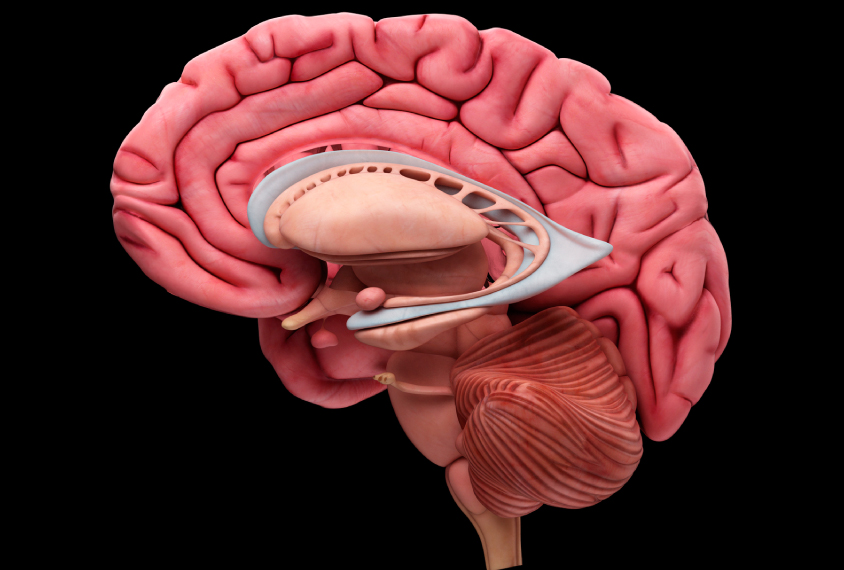
In autism, brain’s emotion hub begins with too many cells
The amygdala, a brain region that governs emotions, may be enlarged and overly connected in children with autism, but it shrinks as the children grow up.
In autism, brain’s emotion hub begins with too many cells
The amygdala, a brain region that governs emotions, may be enlarged and overly connected in children with autism, but it shrinks as the children grow up.
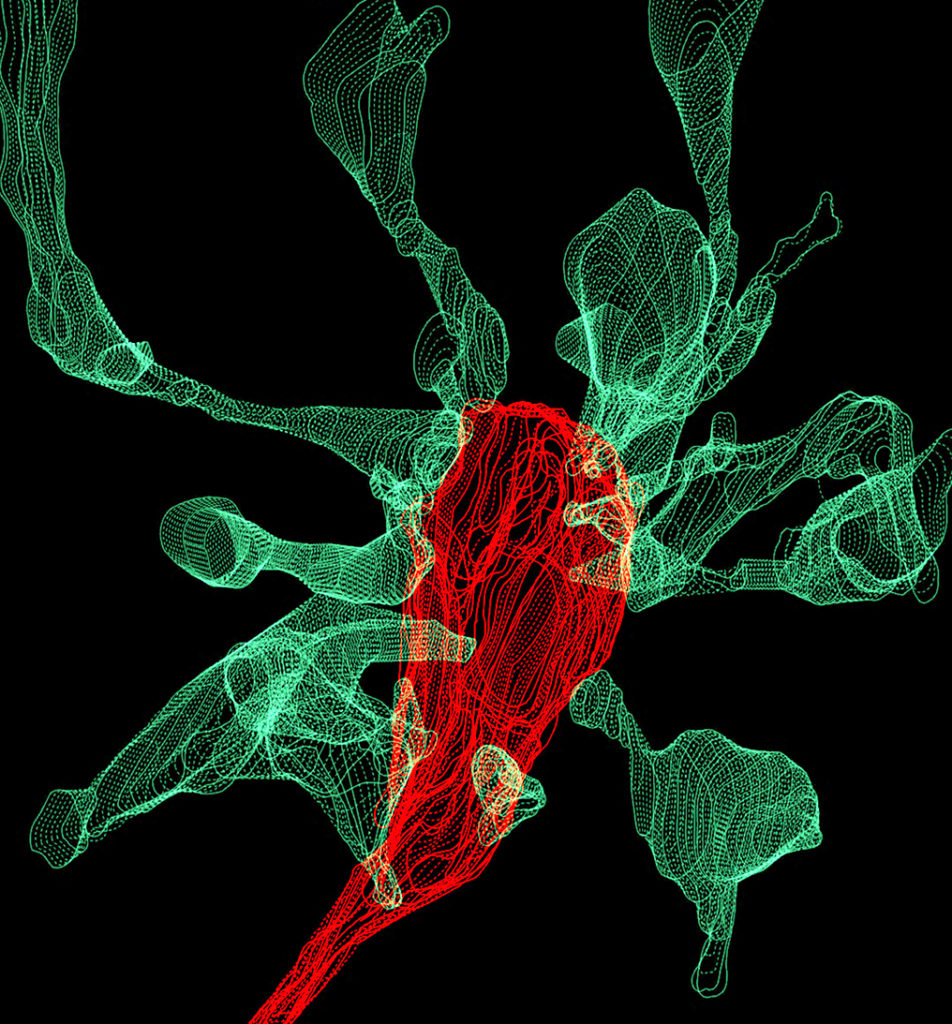
Microglia may have only small appetite for synapses
Microglia come into frequent contact with synapses, the connections between neurons, but they appear to nibble on them rather than engulf and digest them.
Microglia may have only small appetite for synapses
Microglia come into frequent contact with synapses, the connections between neurons, but they appear to nibble on them rather than engulf and digest them.
Gene on chromosome 16 may be valuable player in autism
Deleting one copy of a gene called MVP impairs the brain's ability to adapt to changes in the environment.
Gene on chromosome 16 may be valuable player in autism
Deleting one copy of a gene called MVP impairs the brain's ability to adapt to changes in the environment.

Takeaways from SfN 2016
Spectrum’s team reported about 50 stories at the Society for Neuroscience annual meeting in San Diego. One big theme this year: how autism relates to bigger questions in neuroscience.
Takeaways from SfN 2016
Spectrum’s team reported about 50 stories at the Society for Neuroscience annual meeting in San Diego. One big theme this year: how autism relates to bigger questions in neuroscience.

New test scores emotional weight of parent-child connections
Videos of mothers and their infants interacting with each other may contain clues to autism risk.
New test scores emotional weight of parent-child connections
Videos of mothers and their infants interacting with each other may contain clues to autism risk.
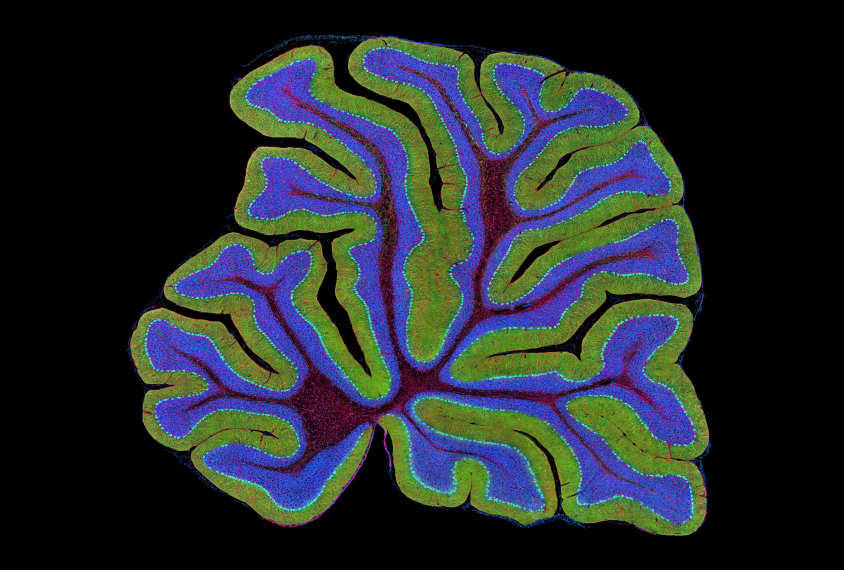
Autism treatments may normalize brain volume in adult mice
The effects of autism mutations on brain volume might be reversible, even in a mature brain.
Autism treatments may normalize brain volume in adult mice
The effects of autism mutations on brain volume might be reversible, even in a mature brain.
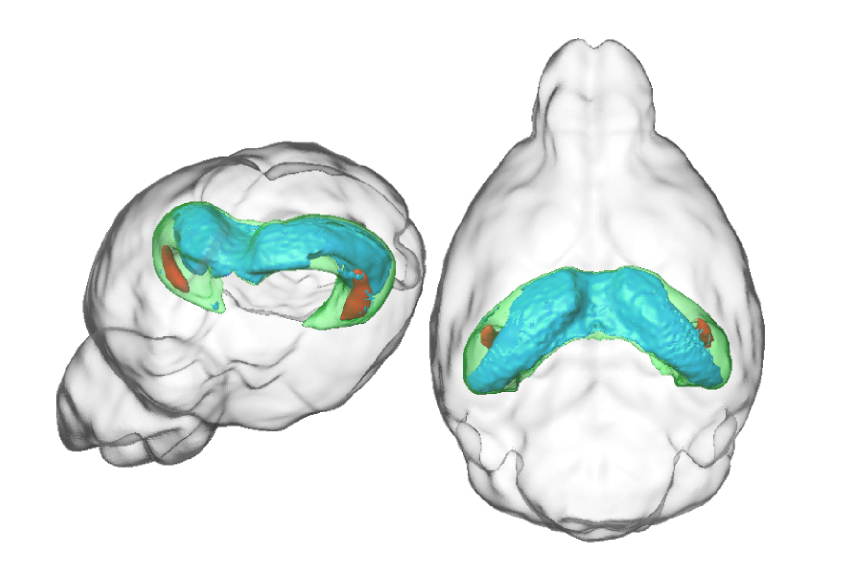
New mice expose consequences of key autism gene
Mice with an extra copy of the autism risk gene UBE3A have cognitive deficits and anxiety, but do not show any core features of the condition.
New mice expose consequences of key autism gene
Mice with an extra copy of the autism risk gene UBE3A have cognitive deficits and anxiety, but do not show any core features of the condition.
Genes, immune exposure collude to up autism risk
The interplay between a mouse’s immune system and certain mutations in her pups may increase autism-like features in the pups.
Genes, immune exposure collude to up autism risk
The interplay between a mouse’s immune system and certain mutations in her pups may increase autism-like features in the pups.
New tool takes rapid genetic snapshot of people’s neurons
A new approach quickly captures an individual’s gene expression pattern at the level of a single neuron.
New tool takes rapid genetic snapshot of people’s neurons
A new approach quickly captures an individual’s gene expression pattern at the level of a single neuron.
Explore more from The Transmitter
Is it time for neuroscience to shift its focus from a computational mind to a navigating mind?
Andrea Hiott explains her navigational approach to the mind, and why now is the time to embrace seemingly paradoxical findings in neuroscience.
Is it time for neuroscience to shift its focus from a computational mind to a navigating mind?
Andrea Hiott explains her navigational approach to the mind, and why now is the time to embrace seemingly paradoxical findings in neuroscience.
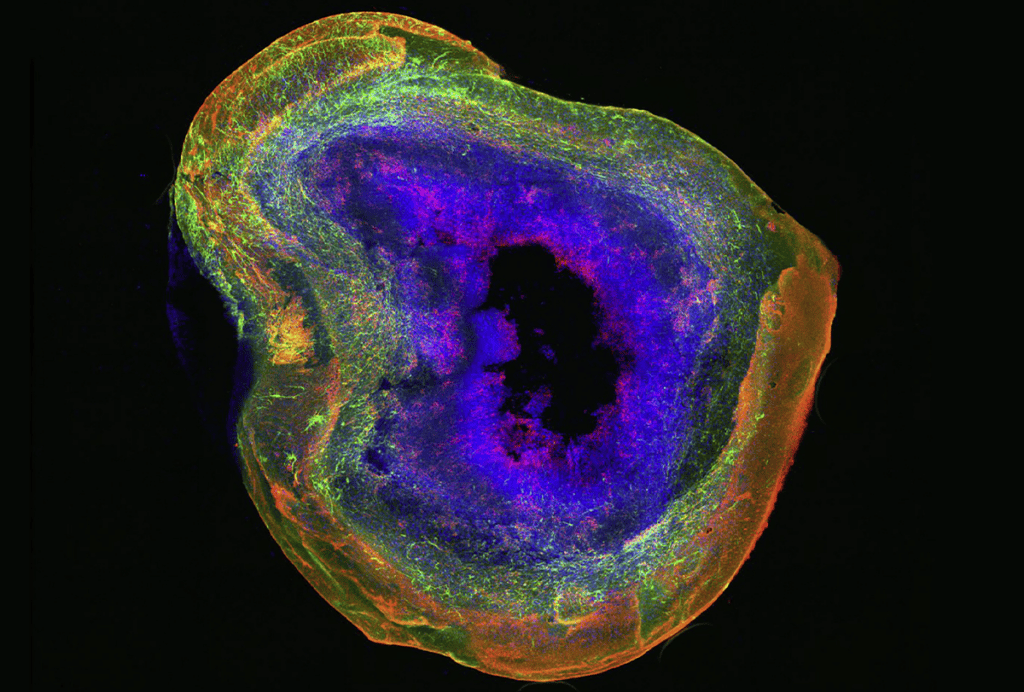
Human brain organoids come of age—but still have room to grow
The U.S. government has touted organoids as an alternative to animals for studying the brain. The model has improved since its debut in 2013, but scientists are still working to overcome key limitations: immaturity, consistency and the lack of vascularization.
Human brain organoids come of age—but still have room to grow
The U.S. government has touted organoids as an alternative to animals for studying the brain. The model has improved since its debut in 2013, but scientists are still working to overcome key limitations: immaturity, consistency and the lack of vascularization.
Finding neuroheterogeneity’s sweet spot
Once thought to be detrimental to memory processing, neuronal diversity—at the right ‘Goldilocks’ dose—is a new boon to theoretical neuroscience.
Finding neuroheterogeneity’s sweet spot
Once thought to be detrimental to memory processing, neuronal diversity—at the right ‘Goldilocks’ dose—is a new boon to theoretical neuroscience.