Yssa DeWoody is co-founder of the Commission on Novel Technologies for Neurodevelopmental Copy Number Variants.
Yssa DeWoody
Co-founder
Commission on Novel Technologies for Neurodevelopmental Copy Number Variants
From this contributor
Lumping versus splitting with autism-linked variants: A conversation with Vanessa Vogel-Farley and Yssa DeWoody
Researchers have long studied subgroups of people who share genetic variants, but the newly formed ‘CNV Commission’ is also looking at people with shared traits across different neurodevelopmental conditions.
Lumping versus splitting with autism-linked variants: A conversation with Vanessa Vogel-Farley and Yssa DeWoody
By
Peter Hess
22 August 2022 | 5 min read
Explore more from The Transmitter
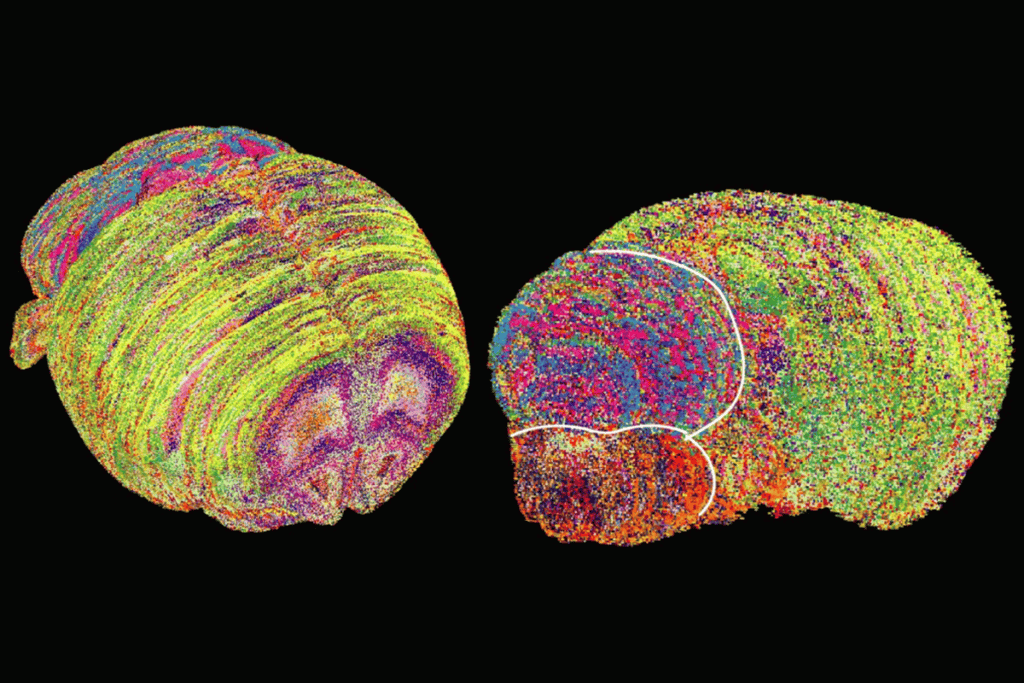
Lipids enter brain mapping limelight
Two new studies, including the first whole-brain lipid atlas in mice, uncover unforeseen complexity and influence during pregnancy and aging.
Lipids enter brain mapping limelight
Two new studies, including the first whole-brain lipid atlas in mice, uncover unforeseen complexity and influence during pregnancy and aging.
By
Lauren Schenkman
27 October 2026 | 6 min read
Behavioral phenomics in zebrafish; and more
Here is a roundup of autism-related news and research spotted around the web for the week of 26 October.
Behavioral phenomics in zebrafish; and more
Here is a roundup of autism-related news and research spotted around the web for the week of 26 October.
By
Jill Adams
27 October 2026 | 2 min read

Neuroscience gave AI its start. What happens now?
David Sussillo maps the two fields' divergent paths, and where they might still meet.
Neuroscience gave AI its start. What happens now?
David Sussillo maps the two fields' divergent paths, and where they might still meet.
By
Emily Singer
27 October 2026 | 10 min read