Nicola Allen is associate professor of molecular neurobiology at the Salk Institute in La Jolla, California.

Nicola Allen
Associate professor
Salk Institute
From this contributor
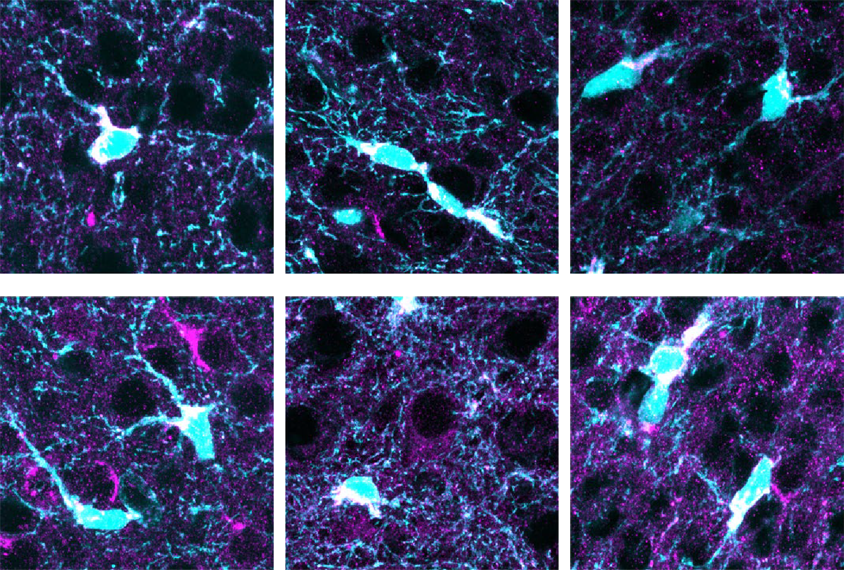
How star cells’ secretions may stunt neurons: Q&A with Nicola Allen
Non-neuronal brain cells called astrocytes secrete proteins that seem to hamper the growth of neurons in people with autism-related syndromes. These proteins could be new drug targets, Allen says.
How star cells’ secretions may stunt neurons: Q&A with Nicola Allen
By
Lauren Schenkman
26 September 2022 | 7 min read
Explore more from The Transmitter
Is it time for neuroscience to shift its focus from a computational mind to a navigating mind?
Andrea Hiott explains her navigational approach to the mind, and why now is the time to embrace seemingly paradoxical findings in neuroscience.
Is it time for neuroscience to shift its focus from a computational mind to a navigating mind?
Andrea Hiott explains her navigational approach to the mind, and why now is the time to embrace seemingly paradoxical findings in neuroscience.
By
Paul Middlebrooks
21 October 2026 | 1 min read
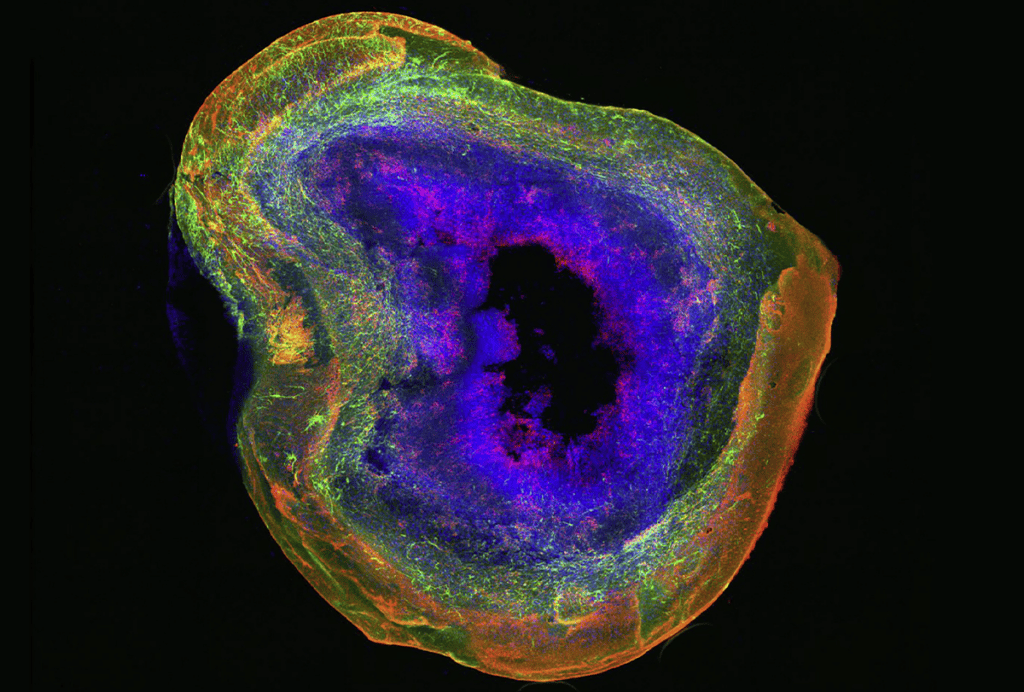
Human brain organoids come of age—but still have room to grow
The U.S. government has touted organoids as an alternative to animals for studying the brain. The model has improved since its debut in 2013, but scientists are still working to overcome key limitations: immaturity, consistency and the lack of vascularization.
Human brain organoids come of age—but still have room to grow
The U.S. government has touted organoids as an alternative to animals for studying the brain. The model has improved since its debut in 2013, but scientists are still working to overcome key limitations: immaturity, consistency and the lack of vascularization.
By
Claudia López Lloreda
21 October 2026 | 9 min read
Finding neuroheterogeneity’s sweet spot
Once thought to be detrimental to memory processing, neuronal diversity—at the right ‘Goldilocks’ dose—is a new boon to theoretical neuroscience.
Finding neuroheterogeneity’s sweet spot
Once thought to be detrimental to memory processing, neuronal diversity—at the right ‘Goldilocks’ dose—is a new boon to theoretical neuroscience.
By
Natalia Mesa
20 October 2026 | 7 min read