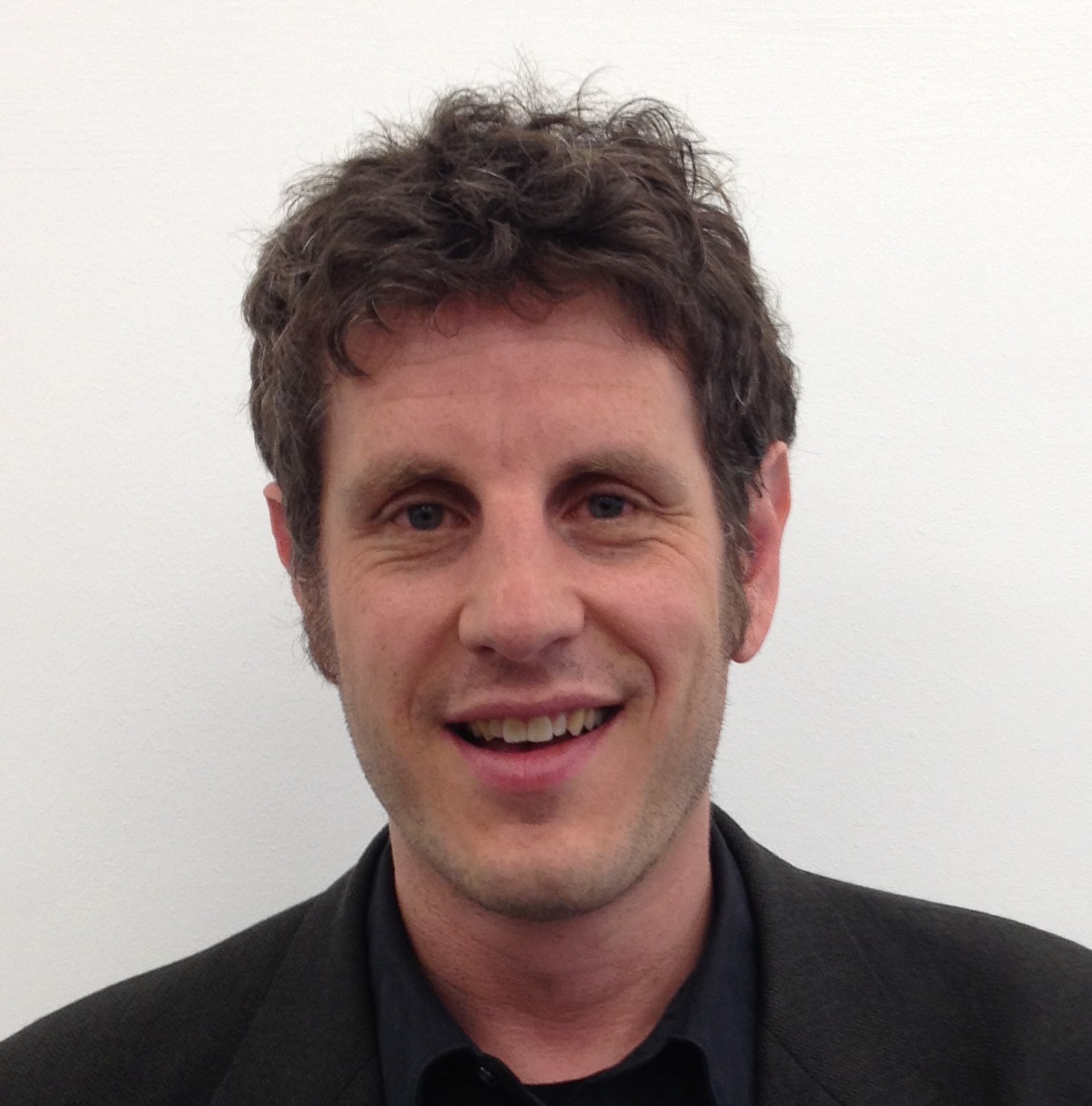
Headshot of Kenneth Harris.

Kenneth Harris

Professor of quantitative neuroscience
University College London

Kenneth Harris is professor of quantitative neuroscience at University College London. Together with Matteo Carandini, he co-directs the Cortical Processing Laboratory. The aim of the laboratory is to understand the computations performed by neuronal populations in the visual system, the underlying neural circuits and the way these computations lead to perceptual decisions. Current research efforts focus on how cortical populations integrate sensory information with information from within the brain.

Harris received a B.A. and Part III in mathematics from the University of Cambridge in 1993 and a Ph.D. in neural computation from University College London in 1998. He then moved to Rutgers University for postdoctoral work, where he eventually opened a laboratory studying neuronal population activity in the neocortex. He next moved to Imperial College London before joining the faculty at University College London.

Harris received the Alfred P. Sloan Fellowship in 2005 and the Royal Society Wolfson Research Merit Award and an EPSRC Leadership Fellowship in 2010. He was named a Burroughs Wellcome Trust Investigator and a Simons Investigator in 2014.


Explore more from The Transmitter

Crowd seen from above.

Common and rare variants shape distinct genetic architecture of autism in African Americans

Certain gene variants may have greater weight in determining autism likelihood for some populations, a new study shows.

By Laura Dattaro
15 January 2026 | 5 min read
Research image of stem cells derived from people of African ancestry.

Bringing African ancestry into cellular neuroscience

Two independent teams in Africa are developing stem cell lines and organoids from local populations to explore neurodevelopmental and neurodegenerative conditions.

By Lauren Schenkman
14 January 2026 | 7 min read

Tomaso Poggio on his quest for theories to explain the fundamental learning abilities of brains and machines

Thus far, engineering has outpaced theory in the science of intelligence. But Poggio is hopeful that theories can catch up.

By Paul Middlebrooks
14 January 2026 | 1 min read

privacy consent banner

Privacy Preference

We use cookies to provide you with the best online experience. By clicking “Accept All,” you help us understand how our site is used and enhance its performance. You can change your choice at any time. To learn more, please visit our Privacy Policy.