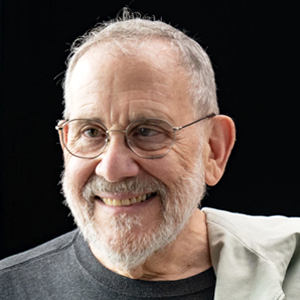
Joshua Sanes is professor of molecular and cellular biology and founding director of the Center for Brain Science at Harvard University. He and his colleagues study the formation of synapses. They have also pioneered new ways to mark and manipulate neurons and the synapses they form.
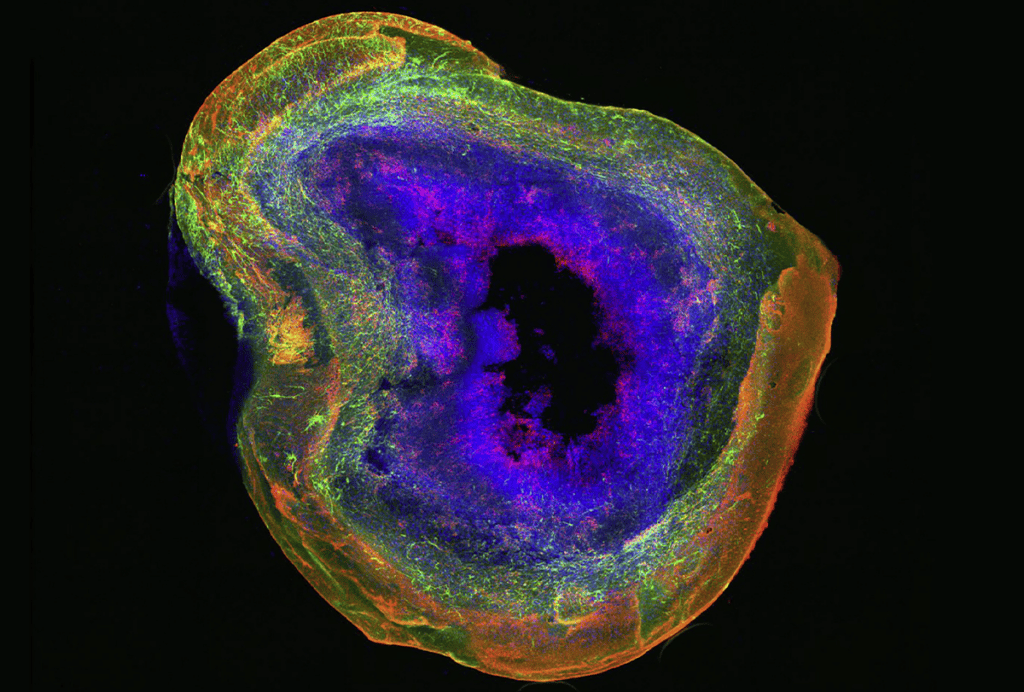
For the past 20 years, Sanes and his team have focused on the retina, in which specific patterns of connections form the complex circuits that underlie the initial steps in visual perception. Most recently, they have extended this work to comprehensive classification of retinal cell types in multiple species, including humans. Sanes received a B.A. from Yale University and a Ph.D. from Harvard University. He served on the faculty of Washington University in St. Louis, Missouri, for more than 20 years before returning to Harvard in 2004.
He is a member of the National Academy of Sciences and the American Academy of Arts and Sciences. His work has been published in more than 400 papers, and he has been honored with the Schuetze Award, the Gruber Neuroscience Prize, the Cowan Award, the Perl-UNC Neuroscience Prize and the Edward M. Scolnick Prize in Neuroscience, as well as an honorary doctoral degree from Hebrew University in Jerusalem, Israel.