Macrocephaly
Recent articles
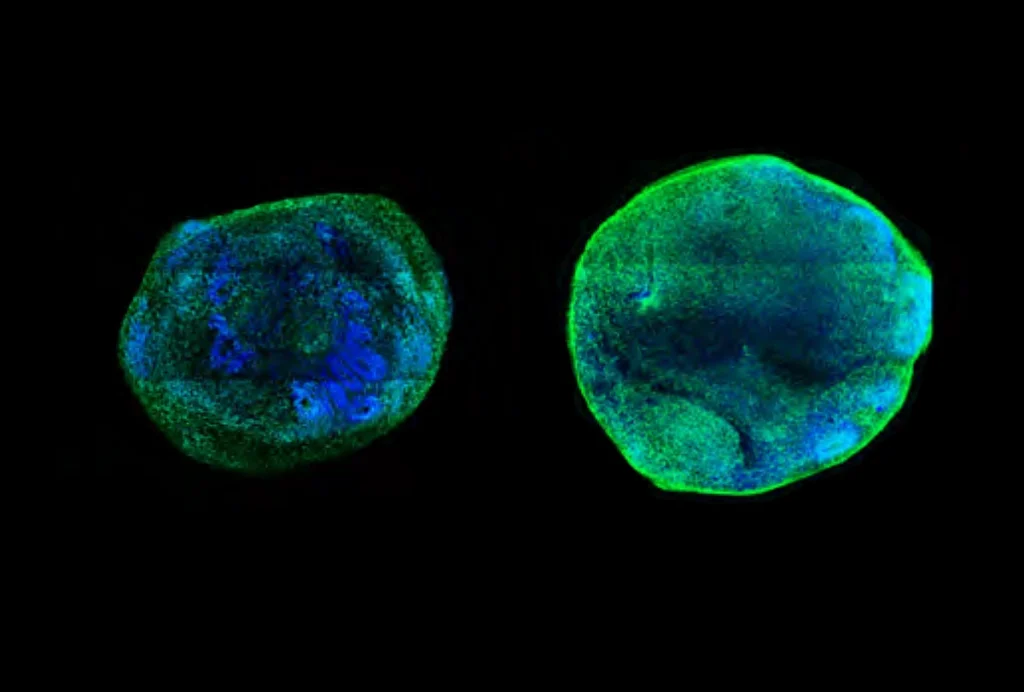
CRISPR gives autism-linked genes a boost, rescues functioning
A modified form of the gene-editing tool increases the expression of CHD8 and SCN2A, showing potential for autism therapies.
CRISPR gives autism-linked genes a boost, rescues functioning
A modified form of the gene-editing tool increases the expression of CHD8 and SCN2A, showing potential for autism therapies.
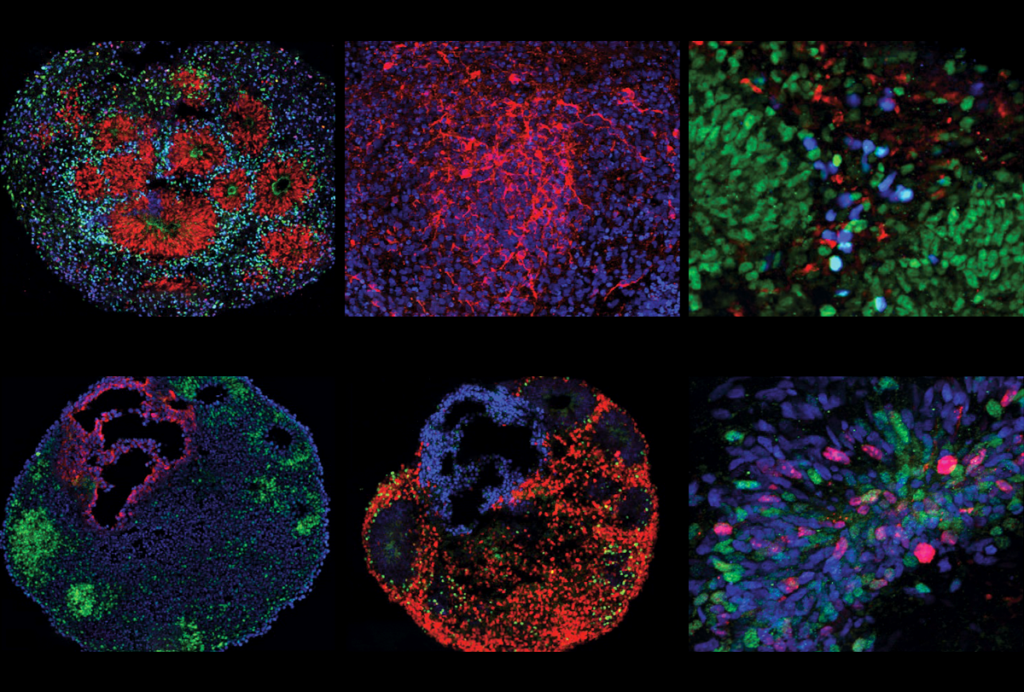
Head size parts autism into two major subtypes
An imbalance in the number of excitatory neurons in early brain development may account for the difference.
Head size parts autism into two major subtypes
An imbalance in the number of excitatory neurons in early brain development may account for the difference.
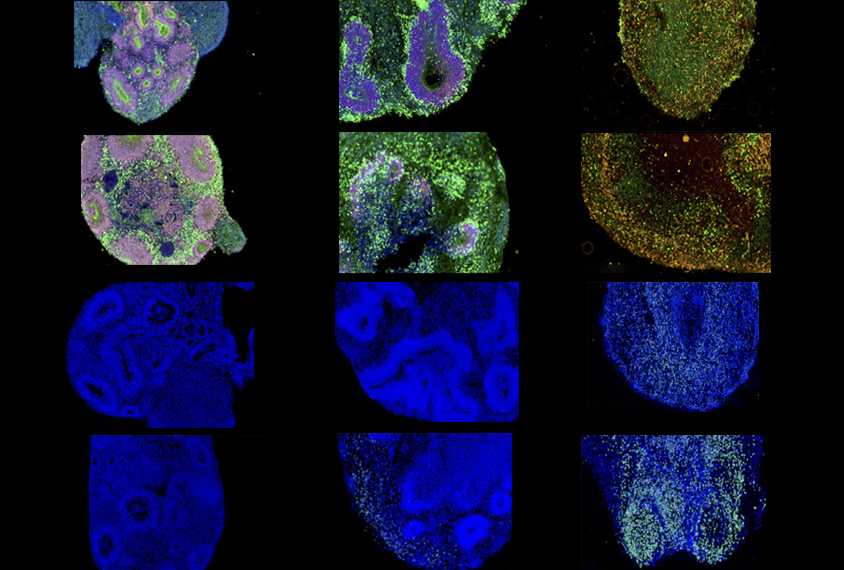
Genetic background sways effects of autism-linked mutation
Experiments offer clues to why certain mutations are associated with autism in some people and not others.
Genetic background sways effects of autism-linked mutation
Experiments offer clues to why certain mutations are associated with autism in some people and not others.
CHD8 mutation in 33 mouse strains yields range of traits
The findings put genetic background forward to help explain autism’s heterogeneity.
CHD8 mutation in 33 mouse strains yields range of traits
The findings put genetic background forward to help explain autism’s heterogeneity.
Excess of ‘don’t eat me’ cell signals may drive brain enlargement in autism
The signal, called CD47, is disrupted in autistic people who have a larger-than-average head.
Excess of ‘don’t eat me’ cell signals may drive brain enlargement in autism
The signal, called CD47, is disrupted in autistic people who have a larger-than-average head.
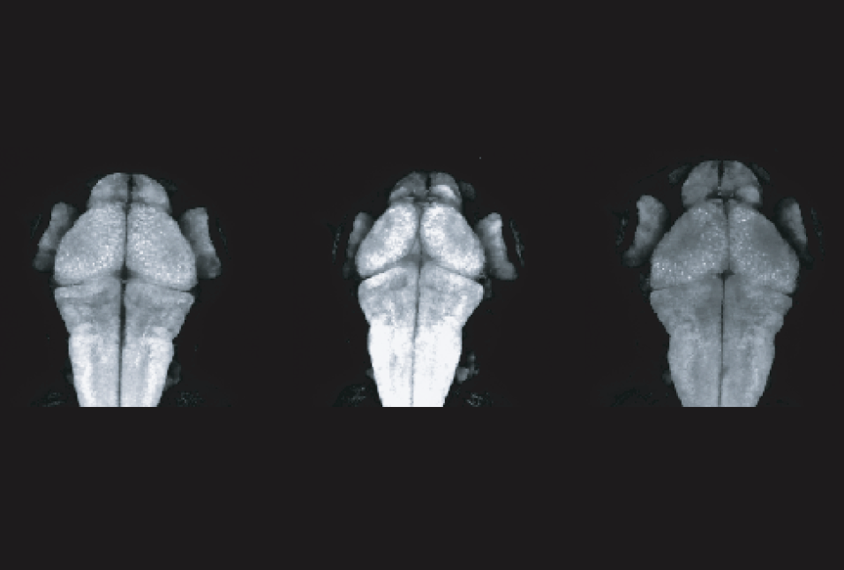
Zebrafish point to new gene involved in brain overgrowth, autism
The gene, YTHDF2, has not previously been linked to autism.
Zebrafish point to new gene involved in brain overgrowth, autism
The gene, YTHDF2, has not previously been linked to autism.

New diagnostic code for PTEN syndrome may spur research
The code may help scientists identify people with the autism-linked condition and recruit them into clinical trials.
New diagnostic code for PTEN syndrome may spur research
The code may help scientists identify people with the autism-linked condition and recruit them into clinical trials.
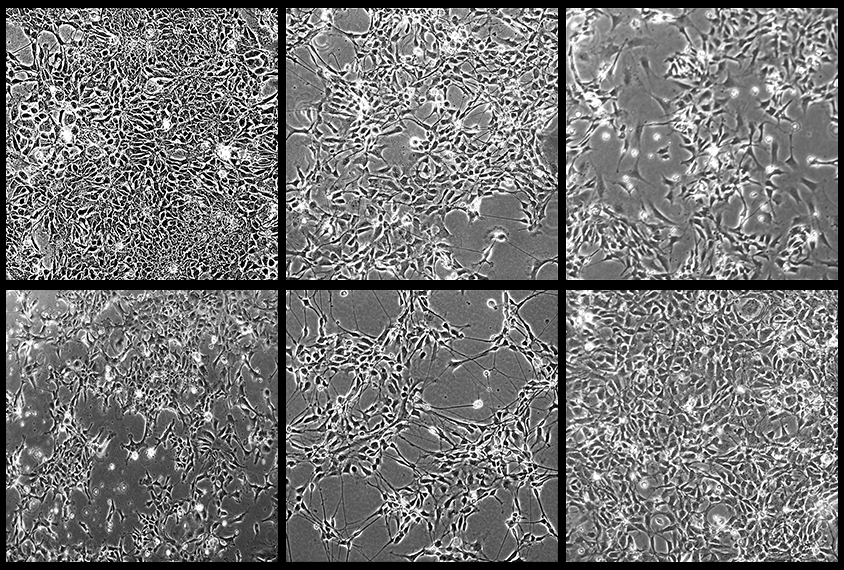
Different forms of autism have opposite problems with brain precursor cells
The cells’ altered proliferation rates hint at ways to diagnose and potentially treat autism earlier.
Different forms of autism have opposite problems with brain precursor cells
The cells’ altered proliferation rates hint at ways to diagnose and potentially treat autism earlier.
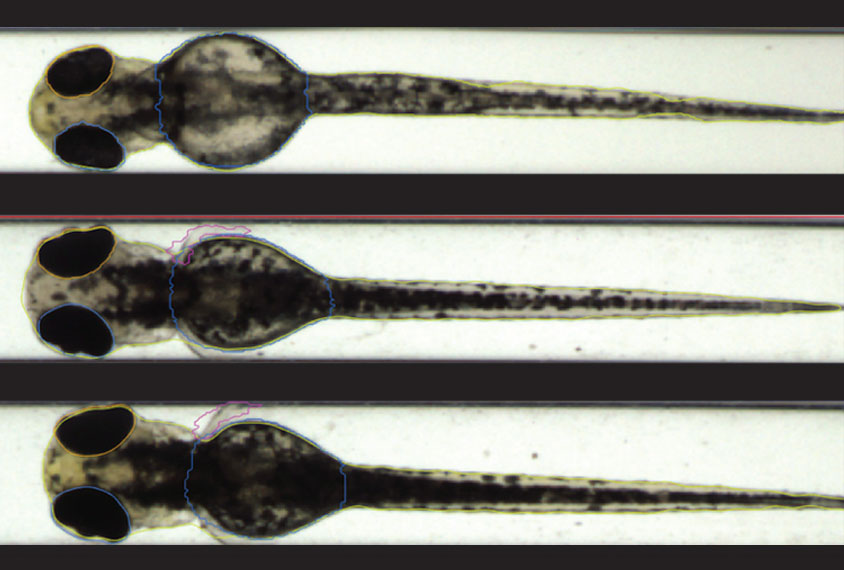
Novel gene linked to brain size in autistic people
The gene, YTHDF2, may be one of several that contribute to an autism subtype marked by an unusually big brain.
Novel gene linked to brain size in autistic people
The gene, YTHDF2, may be one of several that contribute to an autism subtype marked by an unusually big brain.
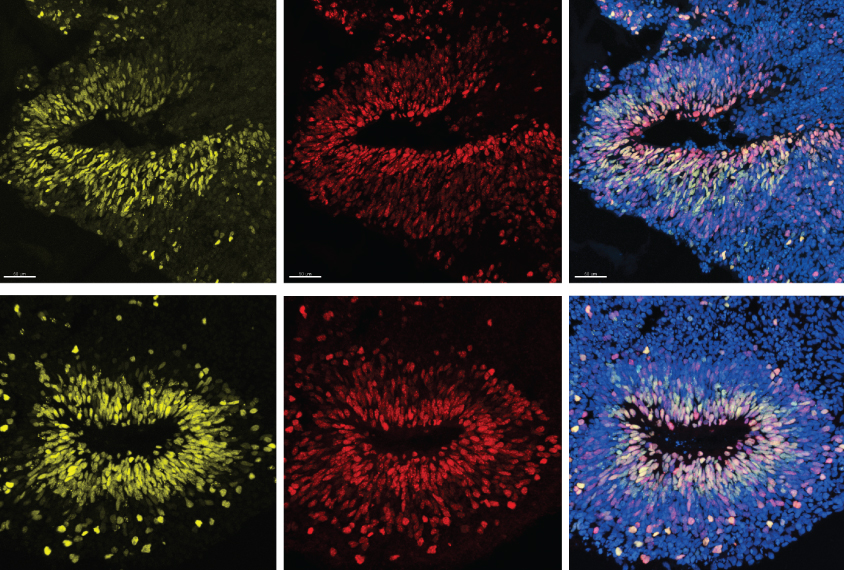
Organoids show how mutations in top autism gene may lead to brain overgrowth in people
The loss of CHD8, a top autism gene, speeds up the production of certain neurons and leads to overgrowth in spheres of cultured brain cells.
Organoids show how mutations in top autism gene may lead to brain overgrowth in people
The loss of CHD8, a top autism gene, speeds up the production of certain neurons and leads to overgrowth in spheres of cultured brain cells.
Explore more from The Transmitter

Prevalence of profound autism declines with new definition
The updated, more precise definition used in a CDC study includes adaptive scores.
Prevalence of profound autism declines with new definition
The updated, more precise definition used in a CDC study includes adaptive scores.
Is it time for neuroscience to shift its focus from a computational mind to a navigating mind?
Andrea Hiott explains her navigational approach to the mind, and why now is the time to embrace seemingly paradoxical findings in neuroscience.
Is it time for neuroscience to shift its focus from a computational mind to a navigating mind?
Andrea Hiott explains her navigational approach to the mind, and why now is the time to embrace seemingly paradoxical findings in neuroscience.
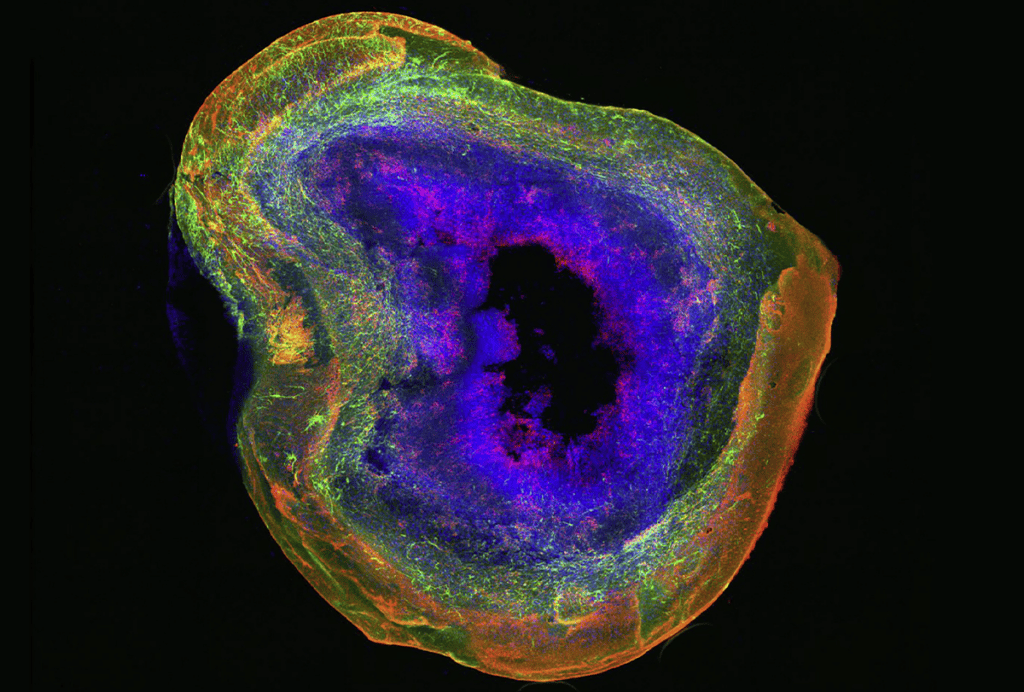
Human brain organoids come of age—but still have room to grow
The U.S. government has touted organoids as an alternative to animals for studying the brain. The model has improved since its debut in 2013, but scientists are still working to overcome key limitations: immaturity, consistency and the lack of vascularization.
Human brain organoids come of age—but still have room to grow
The U.S. government has touted organoids as an alternative to animals for studying the brain. The model has improved since its debut in 2013, but scientists are still working to overcome key limitations: immaturity, consistency and the lack of vascularization.