Brain mapping
Recent articles
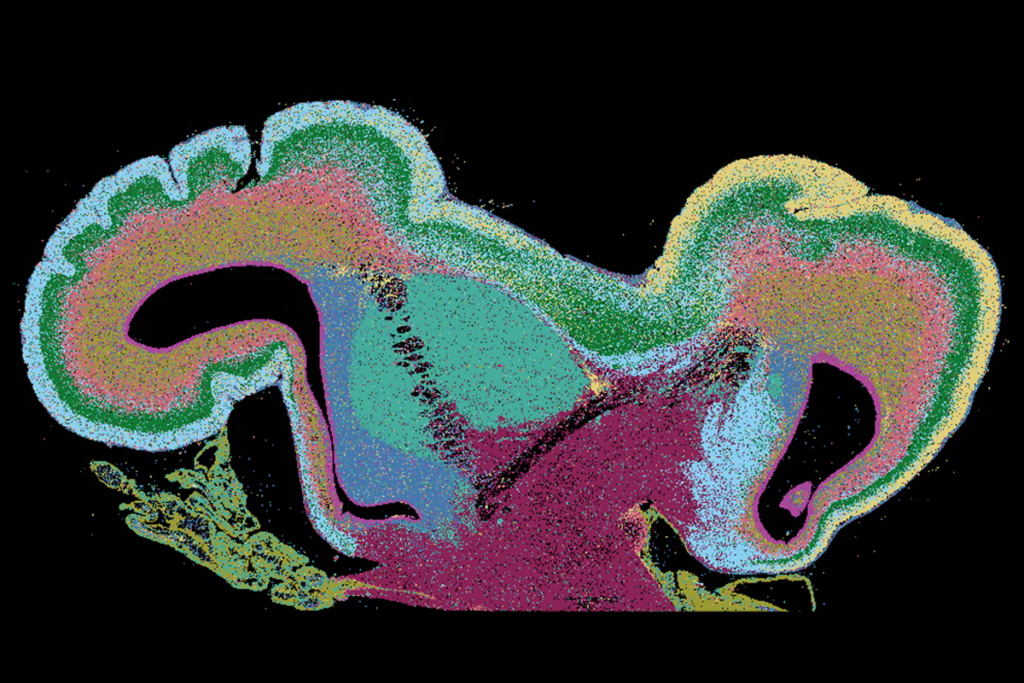
Among brain changes studied in autism, spotlight shifts to subcortex
The striatum and thalamus are more likely than the cerebral cortex to express autism variants or bear transcriptional changes, two unpublished studies find.
Among brain changes studied in autism, spotlight shifts to subcortex
The striatum and thalamus are more likely than the cerebral cortex to express autism variants or bear transcriptional changes, two unpublished studies find.
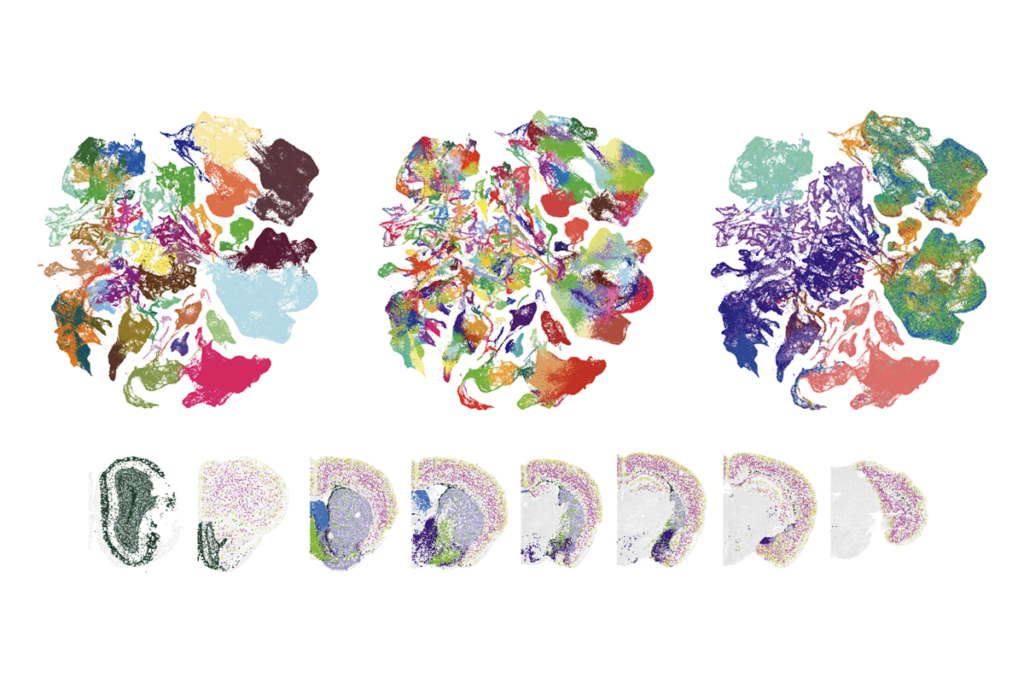
Constellation of studies charts brain development, offers ‘dramatic revision’
The atlases could pinpoint pathways that determine the fate of cells linked to neurodevelopmental conditions.
Constellation of studies charts brain development, offers ‘dramatic revision’
The atlases could pinpoint pathways that determine the fate of cells linked to neurodevelopmental conditions.
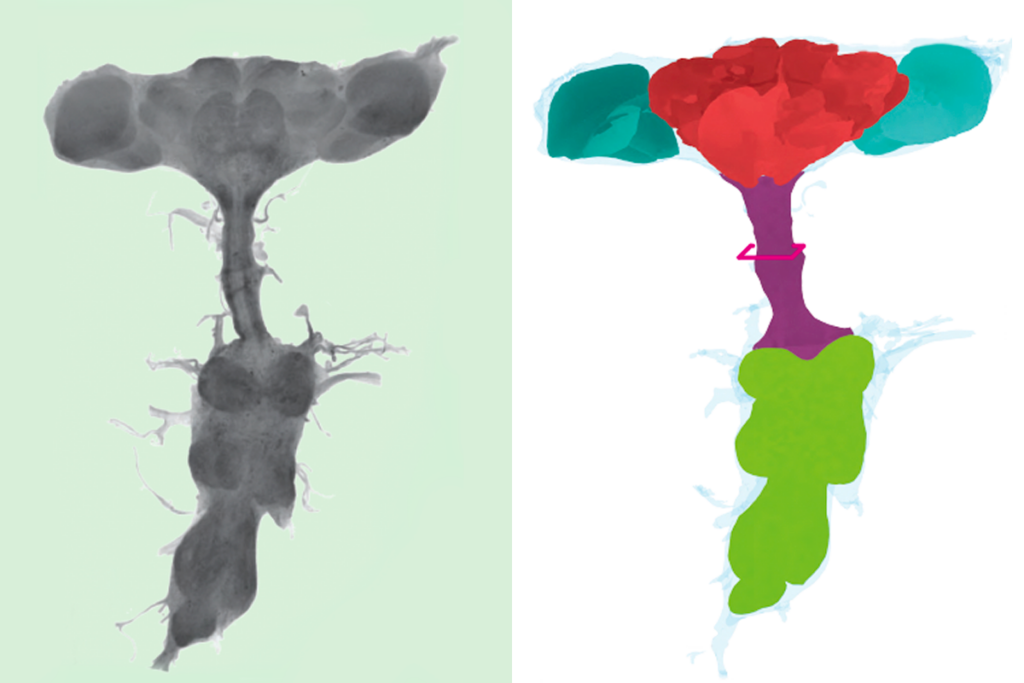
Local circuit loops within body control fly behavior, new ‘embodied’ connectome reveals
The mapping, which traces how the central nervous system interacts with the rest of the body, challenges the idea that behavior control is centralized.
Local circuit loops within body control fly behavior, new ‘embodied’ connectome reveals
The mapping, which traces how the central nervous system interacts with the rest of the body, challenges the idea that behavior control is centralized.
Astrocyte networks span large swaths of brain
The networks are plastic, connect brain regions that aren’t connected by neurons and may enable long-distance communication between astrocytes, a new preprint shows.
Astrocyte networks span large swaths of brain
The networks are plastic, connect brain regions that aren’t connected by neurons and may enable long-distance communication between astrocytes, a new preprint shows.
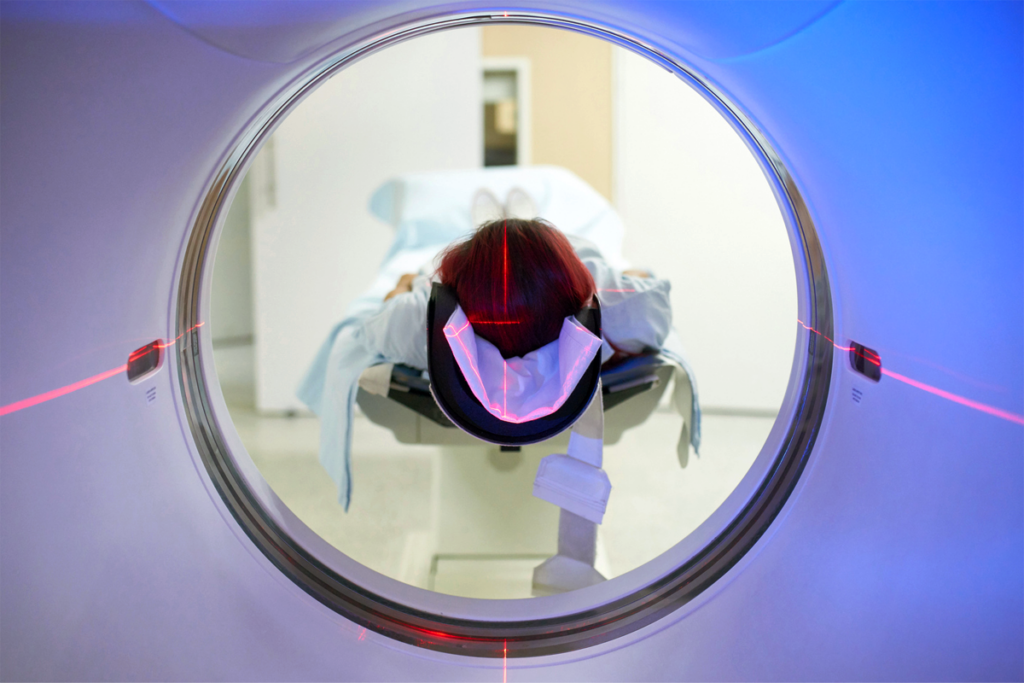
Longer fMRI brain scans boost reliability—but only to a point
Around 30 minutes of imaging per person seems to be the “sweet spot” for linking functional connectivity differences to traits in an accurate and cost-effective way.
Longer fMRI brain scans boost reliability—but only to a point
Around 30 minutes of imaging per person seems to be the “sweet spot” for linking functional connectivity differences to traits in an accurate and cost-effective way.
Exclusive: Recruitment issues jeopardize ambitious plan for human brain atlas
A lack of six new brain donors may stop the project from meeting its goal to pair molecular and cellular data with the functional organization of the cortex.
Exclusive: Recruitment issues jeopardize ambitious plan for human brain atlas
A lack of six new brain donors may stop the project from meeting its goal to pair molecular and cellular data with the functional organization of the cortex.
Mitochondrial ‘landscape’ shifts across human brain
Evolutionarily newer regions sport mitochondria with a higher capacity for energy production than older regions, according to the first detailed map of the organelles in a tissue slice, adding to mounting evidence that the brain features a metabolic gradient.
Mitochondrial ‘landscape’ shifts across human brain
Evolutionarily newer regions sport mitochondria with a higher capacity for energy production than older regions, according to the first detailed map of the organelles in a tissue slice, adding to mounting evidence that the brain features a metabolic gradient.
Noninvasive technologies can map and target human brain with unprecedented precision
But to fully grasp the tools’ potential, we need to better understand how electric and magnetic fields interact with the brain.
Noninvasive technologies can map and target human brain with unprecedented precision
But to fully grasp the tools’ potential, we need to better understand how electric and magnetic fields interact with the brain.
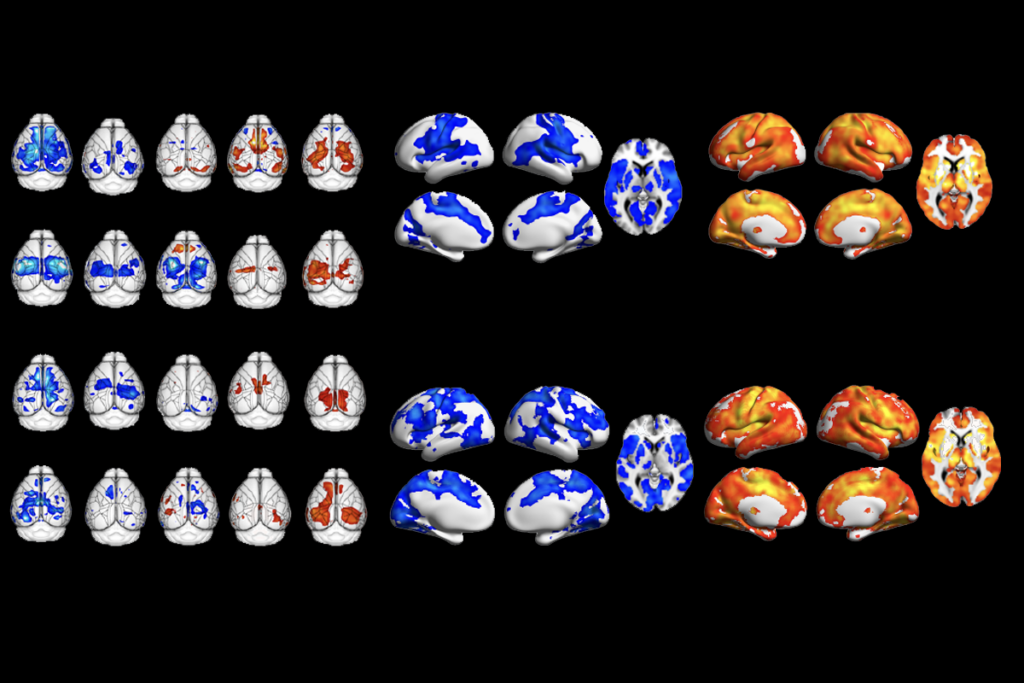
Too much or too little brain synchrony may underlie autism subtypes
Functional connectivity differences in autism mouse models point to two subtypes that correspond to patterns seen in some people with the condition.
Too much or too little brain synchrony may underlie autism subtypes
Functional connectivity differences in autism mouse models point to two subtypes that correspond to patterns seen in some people with the condition.
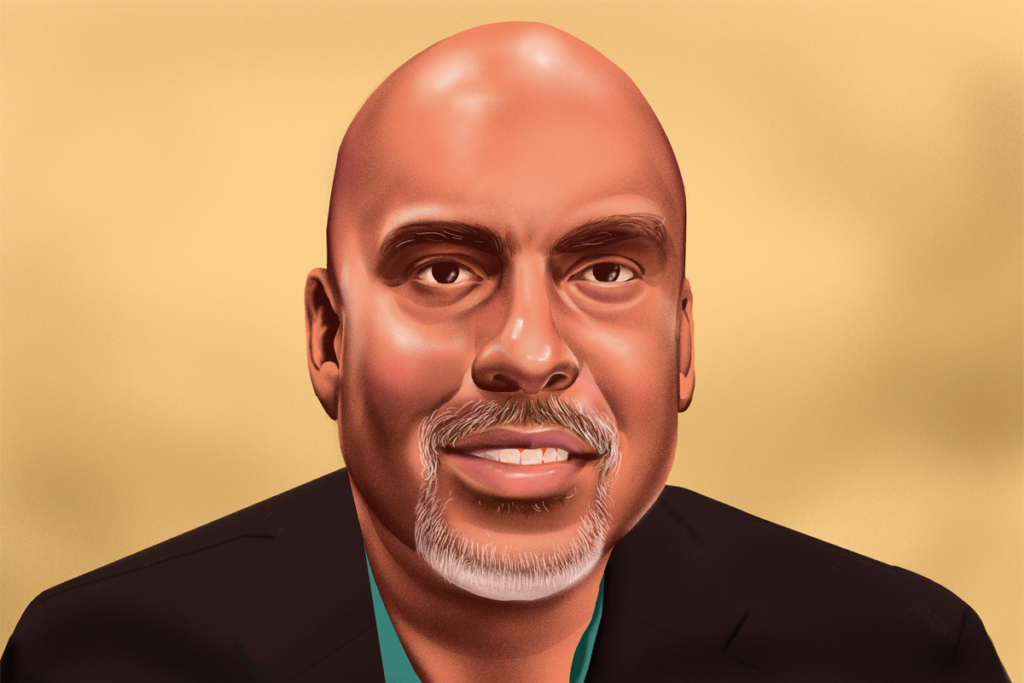
Stimulating the brain with Damien Fair
The MacArthur Foundation “genius” discusses his return to his home state of Minnesota and why it’s important to protect the developing brain.
Stimulating the brain with Damien Fair
The MacArthur Foundation “genius” discusses his return to his home state of Minnesota and why it’s important to protect the developing brain.
Explore more from The Transmitter
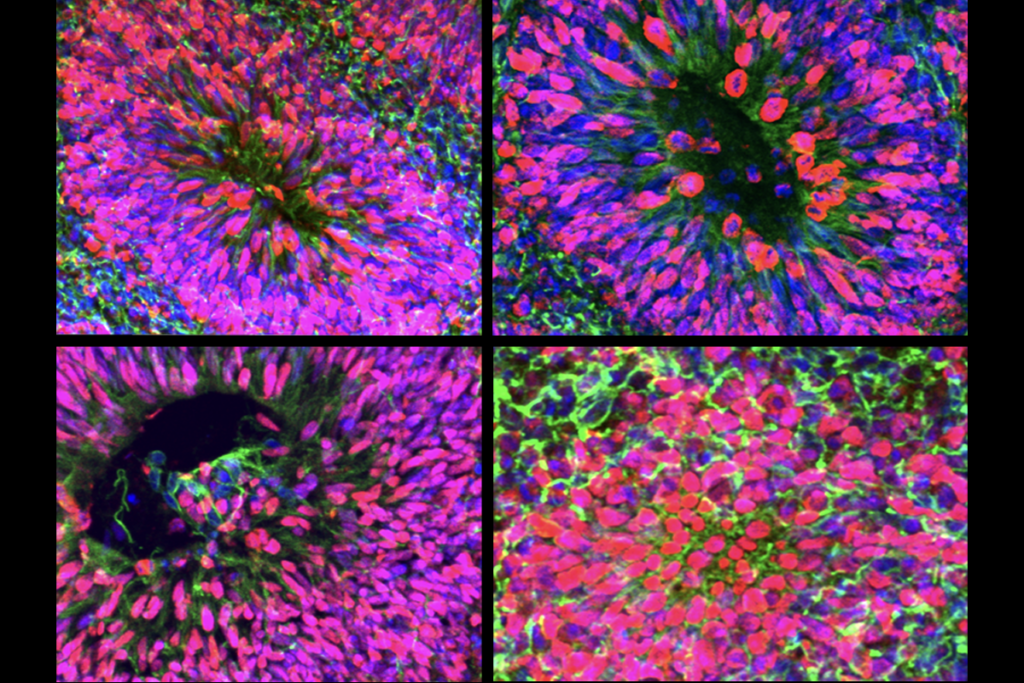
New organoid atlas unveils four neurodevelopmental signatures
The comprehensive resource details data on microcephaly, polymicrogyria, epilepsy and intellectual disability from 352 people.
New organoid atlas unveils four neurodevelopmental signatures
The comprehensive resource details data on microcephaly, polymicrogyria, epilepsy and intellectual disability from 352 people.
Can neuroscientists decode memories solely from a map of synaptic connections?
Five experts discuss the progress, possibilities and hurdles of decoding a “nontrivial” memory from an organism just by analyzing its brain connectivity patterns.
Can neuroscientists decode memories solely from a map of synaptic connections?
Five experts discuss the progress, possibilities and hurdles of decoding a “nontrivial” memory from an organism just by analyzing its brain connectivity patterns.
AI-assisted coding: 10 simple rules to maintain scientific rigor
These guidelines can help researchers ensure the integrity of their work while accelerating progress on important scientific questions.
AI-assisted coding: 10 simple rules to maintain scientific rigor
These guidelines can help researchers ensure the integrity of their work while accelerating progress on important scientific questions.